
Sydney Historical Archaeology Practitioners Workshop (SHAP) is proudly presented by Extent Heritage.
Acknowledgement of Country
Extent Heritage acknowledges that this event takes place on the unceded lands of the Gadigal People of the Eora Nation. We pay our respect to Elders past and present and take this opportunity to extend that respect to all Aboriginal and Torres Strait Islander peoples. Always was, Always will be – Aboriginal Land
Presenters and Abstracts
Session One - Engaging Publics
9:30 am - 10:50 am
Getting people to 'dig' archaeology: Dig It! at the Museum of Sydney
Dr Aaron de Souza, Museums of History NSW
20 Min Presentation
Besides digging up old things and mistaking us for palaeontologists, the average person doesn’t really know what archaeologists do. Dig It!, the interactive archaeological experience at the Museum of Sydney, gives visitors a taste of archaeological practice in a way that is informative but fun. Aspiring archaeologists can mend and draw artefacts, hear archaeologists speak about specific object types, and try their hand at digging in an excavation ‘game’, developed in collaboration with Junior Major.
Fun for kids and nostalgic for grown-ups, Dig It! gives visitors a greater appreciation for the value of archaeology, as well as an understanding of what happens if you use the wrong tool! The experience is a key component of newly developed schools programs and will reach online audiences far and wide long after the exhibition closes. People can only value what they understand. Dig It!, together with the Unearthed exhibition, is increasing social awareness of Australian historical archaeology and illustrates the power of public engagement for promoting the value of archaeology, history and heritage practice.
Empowering and engaging students: Incorporating historical archaeology in formal education environments
Helen Nicholson, Kalliope Consultancy
20 Min Presentation
Terrified of standing up in front of a school class? Not sure what you should talk about? AI told me: “Engaging children in archaeology involves hands-on, simulated excavation activities, such as sandbox digs for ""artifacts,"" creating time capsules, and visiting museums ...” but archaeology is so much more than this. To engage primary and high school students you need to make your presentation personal, active and creative.
This presentation provides a brief overview of the new NSW K - 10 History Curriculum to be taught from 2027 and offers some practical suggestions and tips for taking archaeology into the
classroom and you won’t need sandbox digs and time capsules. A Powerpoint is all you want although half a dozen artefacts would be good they are not essential.
Old News, New Tricks: Using Big Data Techniques to 'Excavate' Archaeology in Australian News Media, 1970 to 2023
Natalie Taylor, Urbis
20 Min Presentation
One persistent challenge facing archaeologists is the public perception of the discipline. Over time, mediums such as film, literature, television, and news media have consistently misrepresented and mythologised archaeology. Media portrayals often perpetuate misconceptions, from exaggerated tales of giants in New South Wales to the use of archaeology in reinforcing nationalist, populist, and far-right ideologies.
This paper presents research conducted as part of an Honours thesis at the University of Sydney, which explores the relationship between archaeology and the Australian news media to better understand how the public perceives the discipline. A multi-scalar, multidimensional approach was employed to identify and analyse recurring tropes and misconceptions in Australian news media coverage from 1970 to 2023.
Utilising Big Data Archaeology, this study applied text-mining techniques to extract insights from a large dataset of news articles. Through this analysis, I examined shifts and continuities in how archaeology has been represented in the media over time. The findings suggest that, while news coverage has increasingly incorporated diverse voices—such as those of First Nations peoples and women—there remains a pervasive focus on the mythical and sensational aspects of archaeology.
Updates to Archaeological Guidelines
Jodi Cameron, Heritage NSW
5 Min Presentation
Heritage NSW have been working on the consolidation and update of two key documents guiding historical archaeological assessments in NSW—the Archaeological Assessments Guidelines and Assessing Significance for Historical Archaeological Sites and Relics—into a single, integrated guideline. The new guidance responds to changes in archaeological practice, policy and legislation, with the aim of improving clarity, consistency, and usability. This talk will outline the rationale for combining the documents and highlight key updates.
Australian archaeological research trust Gary Vines
The Australian Archaeological Research Trust (AART)
Dr Samuel Dix, Flinders University and Gary Vines, Biosis.
The Australian Archaeological Research Trust (AART) is a proposed not-for-profit organisation established to undertake archaeological research for public benefit across Australia. Led by professional archaeologists, AART aims to support excavation, analysis, publication, student training, and community engagement outside commercial consulting frameworks. The organisation seeks to create accessible opportunities for students, volunteers, and emerging practitioners while maintaining high professional and ethical standards.
AART intends to operate through grants, partnerships, crowdfunding, philanthropy, and low-cost field schools, supporting research projects with strong educational and community value. The Trust is currently seeking collaborators, volunteers, project ideas, and State or Territory representatives to assist in establishing the organisation nationally.
For further information or expressions of interest, please contact ausarchtrust@gmail.com.
Break: Morning tea - 10:50 am - 11:20 am
Session Two: Artefacts, Objects & Material Culture
11:20 am - 12:40 pm
Death, Dynasty, and Daily News: Reading a 1901 'Time Capsule' from a Parramatta Institution
Jane Rooke, AMBS Ecology and Heritage
20 Min Presentation
The Parramatta Convict, Lunatic, and Invalid Establishment occupied the Female Factory buildings once the factory closed at the end of 1847. The imposing stone walls enclosing the Solitary Cell Block of the Parramatta Female Factory remain around what is now referred to as the Artisan’s Yard. The history of the institution is well documented, almost familiar, and yet two glass containers and their contents, found in the wall, inform us there is still more to learn. Examining the newspaper clippings of the royal visit and, in contrast, the many death notices found in the glass jars, provide an insight into the possible conflicting emotions of joy and despair felt within the institution at the turn of the century.
'Some grotesque head with staring eyes': Mid-19th century pipes and social change
Denis Gojak
20 Min Presentation
The skull-shaped clay pipe promoting the Unearthed exhibition and found at the First Government House site is not only a dramatic and engaging artefact in its own right but also directs attention to changing consumer behaviour in the mid-19th century. Clay pipes in Britain had evolved slowly in a clear trajectory over centuries, but this changed rapidly over the course of the 1840s.
In Australia this transformation has tended to be lost in the weeds between the end of convict transportation and the goldrushes, but it appears to be independent of either. In this paper, I’ll describe the skull pipe and what it tells us about mid-19th century clay pipemaking, and how it was part of an explosion of cutties, Irish pipes, yachters, effigy and other sorts of pipes that emerged during this period, and which became part of global trading networks in the late 1840s and 50s.
Robin Thomas Reserve — Show and tell of conditions
Brian Shanahan, Extent Heritage
5 Min Presentation
Sydney Harbour Bridge Cycleways Project: life in Milsons Point before the station and the bridge
Amanda Bie Wojcik, Artefact Heritage and Environment
5 Min Presentation
The construction of the Sydney Harbour Bridge in the 1920s was both a symbol of hope, bringing jobs to a struggling Sydney, and a source of loss for residents of Milsons Point. Houses, shops, churches and businesses were demolished without compensation, a practice not uncommon in the city’s development. Who decides what is lost and what remains?
Archaeological monitoring for the Sydney Harbour Bridge Cycleways revealed more than expected: insights into house construction along Alfred Street, complex drainage systems shaped by the sandstone landscape, and an underground structural network, much of which was preserved.
As heritage professionals, we have a responsibility to tell the stories of everyday people. The remains of Milsons Point residences invite reflection on preservation and offer a glimpse of a once-thriving community before the iconic bridge transformed it.
Panel Discussion - Rethinking the SHAP Acronym
10 Min Presentation
Break: Lunch - 12:40 pm - 1:25 pm
Session Three - Method, practice & excavation
1:25 pm - 2:40 pm
Lost in translation? A singular perspective on single context excavation
Peter Woodley
20 Min Presentation
The single context recording system is one of the few codified and intellectually coherent excavation methodologies in the history of archaeology. This paper first explores the origins of the single context recording system by revisiting the people who developed the system, their historical context, and the chain of reasoning which led to the codification of the system. In clarifying the key principles and attributes of single context recording, we also make a claim for the radical nature of the system, and emphasise a neglected link to post-processual archaeologies. Having defined what single context recording is (and isn't), I reflect upon 30 years of observing and participating in archaeological excavations in Sydney to pose the question: did something get lost in translation?
Historical Archaeological and Excavation Strategies
Dr Iain Stuart, Artefact Heritage and Environment
20 Min Presentation
How were sites dug back in the day? This seems like a trivia question but it is important in understanding the nature of the results from excavations as different strategies used to excavate sites can lead to different results. Furthermore the apprentice-like training of archaeologists lead to the entrenchment of certain approaches to excavation as the default method rather than there being consideration of alternative strategies.
This paper continues research into the early years of historical archaeology in Australia focusing on the excavation strategies used to dig the sites. It is based on published research and personal communications at the excavation strategies used. Inevitably this research has spilled across into Aboriginal archaeological excavation strategy.
Landscape Archaeology of Ireland
Brian Shanahan, Extent Heritage
20 Min Presentation
Idealism and the reality of commercial archaeology Dylan Banber - Cotswold archaeology 5 min Presentation
For a year, I've worked as an archaeologist for Cotswold Archaeology on a wide variety of sites, and I have seen both the idealism and the reality of commercial archaeology, being aware and conscious of the work we do. digging the same ditches and pits that were dug thousands of years ago, pottery and flint made in a wide array of methods and styles. The demands of commercial can overshadow your university education, favouring a quick and uniform approach to streamline the process, thereby undercutting competitors in terms of time and money. So I would like to talk about what we can do to allow for an archaeological industry that can make room for both.
Break: Afternoon Tea - 2:40 pm - 3:10 pm
Session Four: Heritage, identity & collections management
3:10 pm - 4:15 pm
Pride and Prejudice: Queering the heritage listings and historical archaeology of Sydney
Rhian Jones, AMBS Ecology & Heritage
20 Min Presentation
It is a truth universally acknowledged, that a developer in possession of a good fortune…must be in want of an Oxford Street property to buy!
The 2024 listing of Captain Moonlite and James Nesbitt’s Graves (Gundagai) on the SHR captured the public imagination, as did the proposal by City of Sydney to list three Oxford Street gay bars on the LEP in 2024, with another three buildings under consideration in 2026. These initiatives, and others such as the recent opening of Qtopia Sydney as the largest centre for Queer history and culture in the world, have garnered much positive media coverage. It appears that decades of activism by the LGBTIQA+ community, backed by Australian proponents of Queer Theory in academia, archaeology and heritage practice may finally be generating momentum at a both State and local government level to acknowledge and protect sites important to the history, cultural and social significance of LGBTIQA+ and queer communities in Sydney.
So can or should historical archaeology be part of the this ‘queering’ process? Do we have a responsibility to ‘sell’ these narratives to developers in the context of heritage practice and consultancy? Are there questions we should ask, methodologies we can use, or prejudices we can discard so we can truly put ‘Pride’ into the historical archaeology of Sydney?
On the northern boundary farms: people, power, and place near 1790s Parramatta
Dr Nicholas Pitt, Laureate Centre for History and Population, UNSW Sydney
20 Min Presentation
In February 1798 Governor John Hunter requested two Parramatta stalwarts (and later neighbours) surgeon Thomas Arndell and chaplain Samuel Marsden, to collect the complaints of small farmers (styled ‘settlers’) who had commenced farming several years previously. High prices from officer-traders were making their lives impossible, and gradually leading to the replacement of these small farms focused on cropping with larger farms owned by these officers.
This presentation focuses on the experience of those farmers in a district then-known as the Northern Boundary, near what is now the Kings School. It draws on three interconnected works - recently published work by myself and Caitlin D’Gluyas that mapped over 600 land grants and leases surrounding Parramatta, a soon to be completed intellectual history looking at the political economy of populations and animals in early colonial New South Wales, and a planned paper that will look at the geography and archaeological footprint of those shifts from small farms to grazing farms.
This work in progress calls for three conversations: conversations with those who have relevant archaeological knowledge of the areas involved; conversations about how these farms are interacting with Aboriginal political economies (including traditional land management and resistance against settlers); and conversations around the significance of what is arguably the first large-scale grazing landscape in Australia.
Rationalising the past: managing large-scale archaeological collections in local government
Magella Kerr & Danielle Orchard, City of Parramatta
20 Min Presentation
The Heritage Collection Services Team manages Parramatta’s historical records across three areas: Council Heritage Archives, Community Heritage Archives, and Cultural Collections. Council archives, dating from 1844, are among NSW’s most comprehensive, while Community
Heritage Archives capture the area’s changing social history. Cultural Collections comprise objects of civic, ceremonial, archaeological, and artistic significance, reflecting the area’s unique heritage.
Our presentation will outline City of Parramatta’s Archaeological Rationalisation Project, a strategic initiative developed in collaboration with Heritage NSW and GML Heritage that establishes a structured methodology to systematically record, photograph, and appraise archaeological material. Now two years into the project, we will be reflecting on our progress and share practical learnings gained through implementation, including challenges encountered, decision making under constraint, and insights applicable to other local government contexts.
We are custodians to 14 historical archaeological assemblages recovered from excavation sites across central Parramatta. These assemblages span nearly four decades, from 1985 to 2022, and comprise over 2000 archive boxes containing tens of thousands of artefacts. Assemblage contents vary significantly, ranging from a small number of large structural items to hundreds of small relics per box. The scale, complexity, and legacy nature of this collection present substantial challenges in long term storage, access, and sustainable management.
The Archaeological Rationalisation Project supports informed decision making regarding retention, re housing, transfer, and disposal, while maintaining regulatory compliance and respecting research value of relics. The significant project offers a practical precedent for local government organisations managing large scale archaeological assemblages and demonstrates an adaptable model for sustainable archaeological collection management.
Archaeologies of Food in Australia
Madeline Shanahan, Underground Heritage
5 Min Presentation
Formal Close: MC 4:15 pm - 4:30 pm
SHAP 2026 would like to take this opportunity to thank all our presenters and attendees. Thank you for supporting practitioner-led dialogue in NSW.
Post Workshop Social Event 4:45 pm onwards
Extent would like to invite all participants to join us for a drink at Harts Pub after the event. Only a 10 minutes walk from the Museum of Sydney, Harts Pub is located at the corner of Essex St &, Gloucester St, The Rocks NSW 2000.
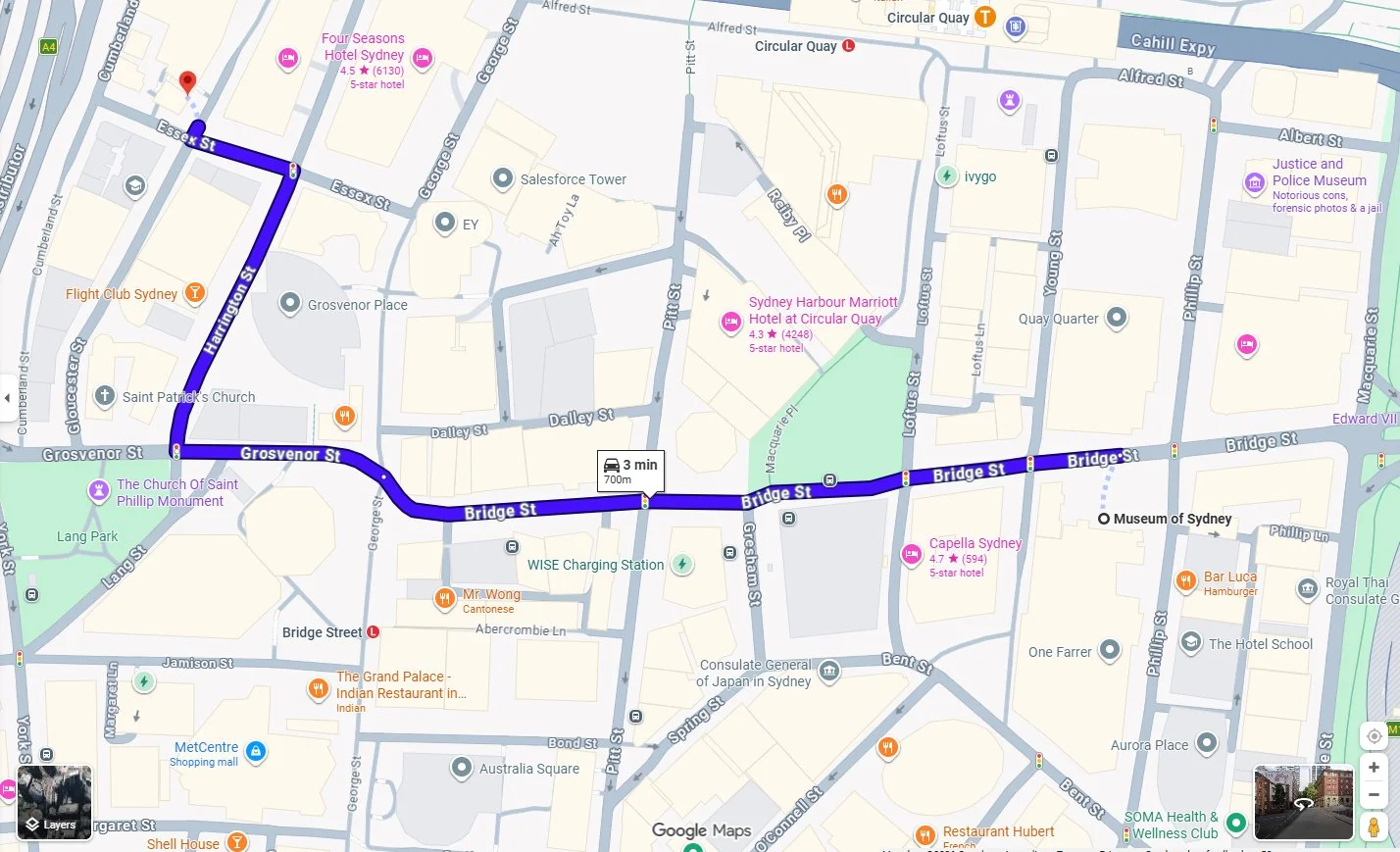
The ticket voucher in the SHAP Welcome bag will provide you one complimentary beverage. If you wish to stay longer, you are welcome to purchase additional drinks.
We hope you’ve enjoyed SHAP2026 and look forward to seeing you next year!
SHAP 2026 is proudly presented by Extent Heritage. 22 May | Museum of Sydney