
Applied ethnobotany: heritage, climate change and the future of Country
In September, we explored how plants are woven into Aboriginal knowledge systems, highlighting Dr Philip Clarke’s reflections on the deep interconnections between biodiversity and cultural survival.
In this feature of Extent – People Centred Heritage, we turn to the applied side of Clarke’s work: how ethnobotany informs heritage practice today, how traditional knowledge can guide adaptation to climate change, and where opportunities lie for collaboration between communities, scientists, and heritage professionals.

Figure 1. Beach hibiscus (Hibiscus tiliaceus) occurs widely in the tropics of Southeast Asia, northern Australia and the Pacific. Major source of seawater-resistant cord.

Figure 2. A ‘canoe-tree’ in a river red gum (Eucalyptus camaldulensis) forest. This tree had a slab of bark removed for making a canoe. It was later ring-barked by settlers wanting to clear the land for pasture.
Plants as living heritage
For Clarke, some of the most compelling examples of heritage values are not found in archives or collections, but in the living landscape itself.
Old trees are a case in point. River Red Gums (Eucalyptus camaldulensis), which can live for centuries, often carry spiritual and cultural significance. Communities may identify them as birthing trees, ring trees, or clan markers – living witnesses to histories that extend well beyond written records.
“Whether we treat a tree as a site in its own right, or as part of a wider cultural landscape, depends on context,” Clarke explains. “But either way, these plants can be at the centre of heritage debates, and they must be handled with care.”
Medicinal plants tell the same story. Gumby Gumby (Pittosporum angustifolium), used as a treatment for coughs and colds, has been part of cultural practice for generations. Such plants remind us that heritage is not only about places, but also about relationships with species that sustain communities.
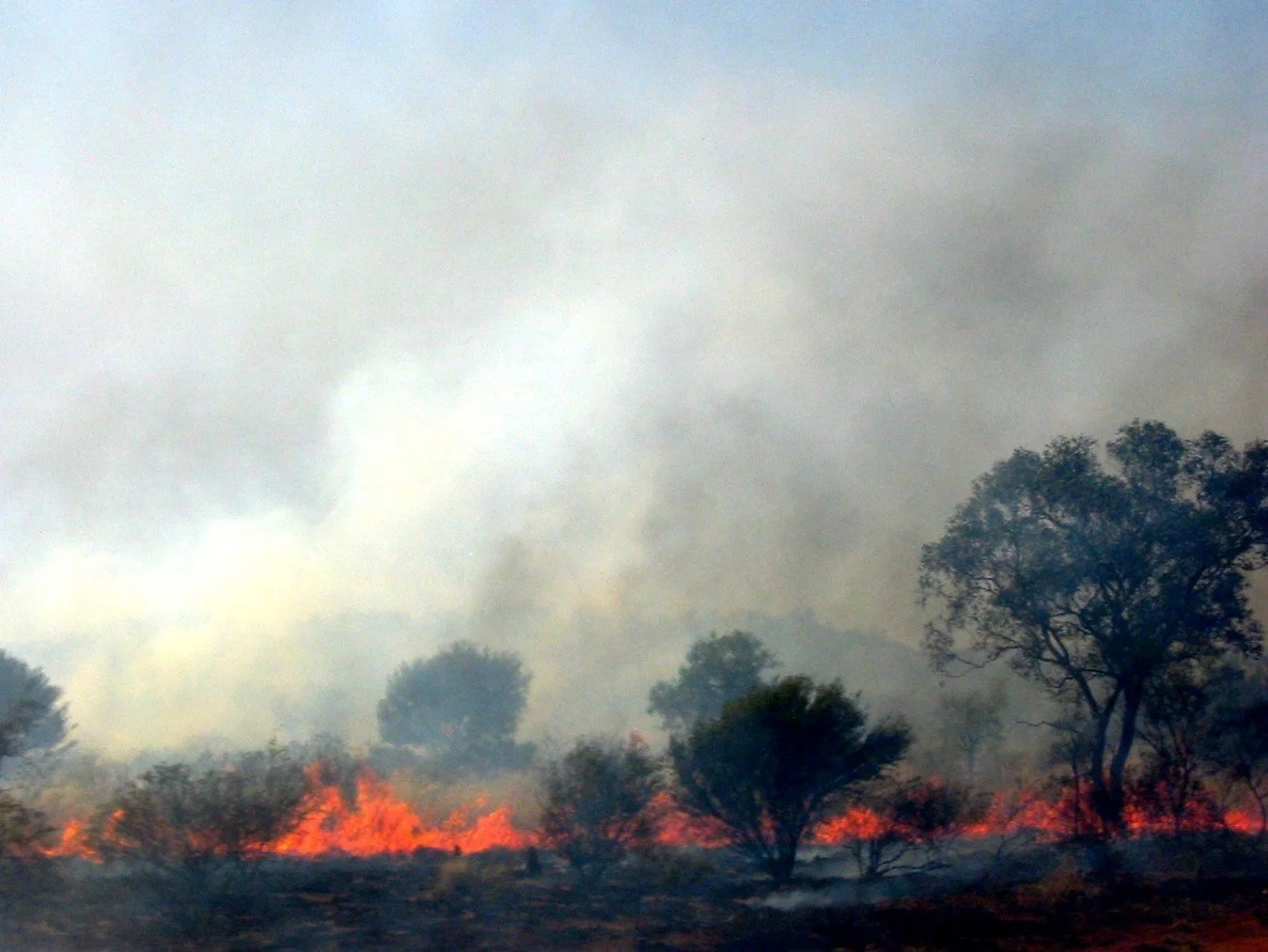
Figure 3. Grass fire. With introduced weeds like the buffel grass (Cenchrus ciliaris), there is more fuel for higher intensity fires that can kill off trees that would otherwise have survived.
Climate change and bush foods
Climate change, Clarke argues, is reshaping these relationships in profound ways. His first project after leaving the South Australian Museum was with Griffith University, investigating the impacts of climate change on Aboriginal communities in southeastern Australia.
“One of the main findings,” he recalls, “was that Aboriginal communities are often the least resourced to deal with climate change impacts. That makes them a kind of litmus test for broader social vulnerabilities.”
Plants sit at the centre of both the risks and the opportunities. Some species may decline or disappear locally, while others may expand their ranges. Traditional knowledge provides vital insights into which species are culturally significant and how they might adapt.
The bush food industry illustrates this potential. Plants such as wattle seed (such as Acacia victoriae) and desert raisin (Solanum centrale) have been harvested by Aboriginal communities for a long time. With climate change, their cultivation might expand into new regions. However, Clarke warns against relying on wild harvest, as it can damage fragile ecosystems. “To make bush foods part of the solution, they need to be cultivated on a larger scale – and Aboriginal communities must be directly involved as growers and custodians.”
monterry

Figure 4. Aboriginal people made cakes from dried manthri (monterry, Kunzea pomifera) fruit and traded these for stone axe heads. Monterry fruit is commonly used in contemporary Australian ‘bushtucker cuisine’, particularly for jams and tarts. This species is part of the emerging bushfood industry.

Figure 5. Coastal daisy-bush (Olearia axillaris), for vermin repellent. The highly scented foliage of this large bush was thrown on the campfire to keep mosquitoes away.
The role of consultancies
For Clarke, applied ethnobotany demonstrates how heritage work can bridge scientific and cultural perspectives, creating opportunities for collaboration with heritage consultancies. When development projects require revegetation, for instance, the choice of plants matters. Restoring landscapes with culturally significant species can achieve more than ecological repair alone.
Manna gums for koalas (a totemic species), or yam daisies for community use, are two examples of how revegetation can restore biodiversity while supporting cultural values.
“Environmental scientists may focus on species diversity, while Aboriginal communities may emphasise the cultural importance of particular plants,” Clarke notes. “Consultancies can help bridge those perspectives and ensure both are respected.”
Past mistakes underline the importance of this role. In Arnhem Land, for instance, proposals to plant African mahogany on former mine sites for commercial return were rejected by communities, who insisted on the restoration of traditional forests instead. Such examples show why collaborative practice is essential: without dialogue and collaboration, projects risk undermining both ecological and cultural heritage.

Figure 6. Sturt Desert pea (Swainsona formosa), known by Western Desert people as malukuru (‘red kangaroo eyes’).

Figure 7. Pituri (Duboisia hopwoodii) was used as a narcotic, as well as to hunt game animals. Aboriginal hunters stupefied emus by placing pituri into waterholes, thereby making these large birds easier to catch.
Looking ahead
For Clarke, the future of ethnobotany lies in expanding this holistic approach. His recent book, Aboriginal Peoples and Birds (2023), explored cultural connections to birds across Australia. His forthcoming volumes on invertebrates and reptiles/amphibians will extend this approach to groups often overlooked in biodiversity studies.
“Invertebrates are far from marginal.” He argues, “Honey ants and witchetty grubs, for example, are more than food sources. They are woven into ceremonies, cosmologies, and cultural identities in Central Australia. Documenting these relationships shows once again that biodiversity and cultural knowledge are inseparable across all domains of life.”
Sustaining futures
Applied ethnobotany is not only about recording the past. It is about sustaining futures – for biodiversity, for culture, and for the communities who continue to hold and renew this knowledge.
At Extent, we are proud to collaborate with Dr Clarke on projects across Australia that bring these perspectives into practice, and we look forward to continuing to learn from his expertise in the years ahead.

Figure 8. Spring pandanus (Pandanus spiralis) fibre, prepared for fibrecraft. The young pandanus leaves have the epidermis and spines removed, before they are split, shredded and dried in the sun. After this, the fibre is ready for dyeing.